
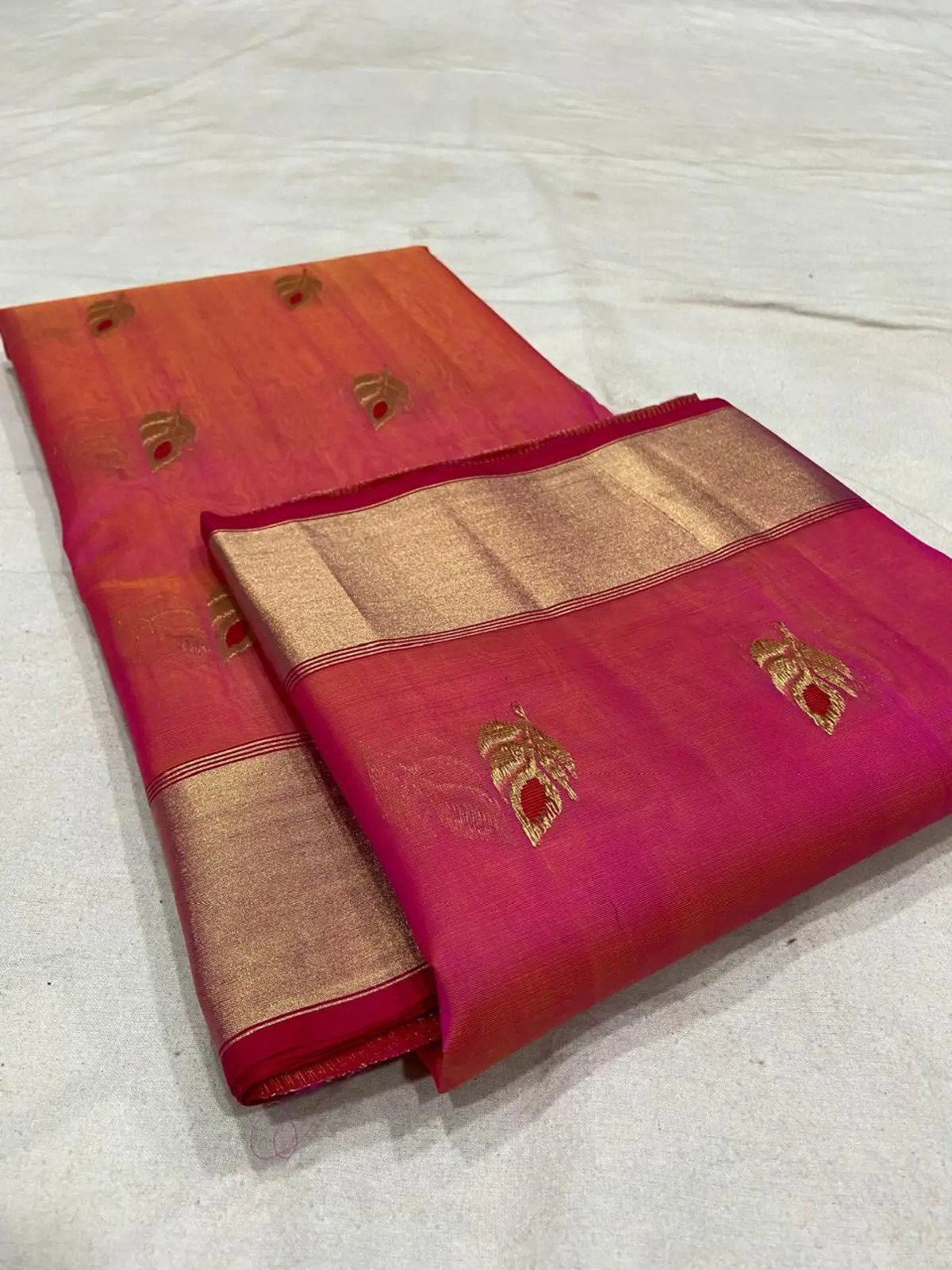
The world of Indian handlooms is a tapestry woven with stories, traditions, and unparalleled artistry. Among its most celebrated threads is the Chanderi saree, a masterpiece that proudly carries the Geographical Indication (GI) Tag #22, signifying its unique origin and quality. Renowned for its ethereal lightness, subtle sheen, and intricate weaves, the Chanderi saree is more than just a garment; it's a legacy passed down through generations of skilled weavers. While the fabric itself is a marvel, it is the motifs that truly elevate a Chanderi saree, transforming it into a wearable work of art. Today, we delve into the captivating world of some of the most coveted Chanderi motifs: the regal Ashrafi, the graceful Morpankh, and the vibrant Meenakari booti, exploring their symbolism, craftsmanship, and enduring appeal, especially in Chanderi sarees with gold zari border.
The Timeless Allure of Chanderi Motifs
Chanderi weaving, historically patronized by royalty, is characterized by its delicate handloom weaves like 'eknaliya' (single warp) and 'donaliya' (double warp), which contribute to the saree's lightweight feel. The motifs, often rendered in gold or silver zari, or sometimes with vibrant silk threads, are not mere decorative elements; they are imbued with cultural significance and artistic intent. The meticulous process of weaving these motifs, especially the traditional Kadwa weave, where each motif is woven independently, ensures a rich texture and a lustrous finish. Understanding the meaning behind these bootis adds a deeper layer of appreciation for the artisan's skill and the cultural narrative embedded within each chanderi silk saree.
Ashrafi Booti: A Symbol of Prosperity and Royal Grace
The Ashrafi booti, translating to 'gold coin' motif, is one of the most classic and revered designs found on Chanderi sarees. Historically, these motifs were inspired by the gold coins that were prevalent during royal reigns, symbolizing wealth, prosperity, and auspiciousness. The Ashrafi booti typically features a small, circular or polygonal motif, often resembling a coin, intricately woven into the fabric, usually in gold zari. These bootis are strategically placed across the saree, creating a subtle yet opulent spread. When woven into a chanderi saree with ashrafi booti, it lends an air of timeless elegance and regal charm. The precision required to weave these small, perfect circles in zari is a testament to the weaver's dexterity. Often, these are complemented by a grand zari border, enhancing the saree's luxurious appeal.
Morpankh Motif: The Dance of the Peacock's Splendor
The Morpankh, or peacock feather motif, is another iconic design that captures the essence of Indian artistry and nature's beauty. The peacock, a symbol of grace, beauty, and immortality in Indian mythology, lends its majestic form to this motif. The Morpankh motif on a Chanderi saree often depicts stylized peacock feathers, intricately woven with zari or silk threads. These motifs can range from small, scattered bootis to larger, more elaborate patterns, often found along the border or scattered across the body of the saree. A morpankh motif chanderi silk saree is a celebration of nature's artistry, evoking a sense of grandeur and elegance. The fluidity and detail in the weaving of the feather's 'eye' are particularly captivating, showcasing the weaver's ability to translate natural forms into textile art. These sarees often feature delicate borders, sometimes with a scallop design, adding a contemporary touch to the traditional weave.
Meenakari Booti: A Symphony of Color and Craft
While Chanderi is often associated with the lustrous sheen of zari, the introduction of Meenakari work brings a vibrant dimension to these exquisite sarees. Meenakari, traditionally an art of enameling on metal, is adapted here to refer to the use of brightly colored silk threads woven intricately to create small, exquisite motifs, often called 'booti' or 'buttis'. A chanderi saree with meenakari work is a delightful fusion of traditional weaving techniques and vibrant artistry. These colorful bootis, often floral or geometric in design, are woven against the subtle sheen of silk and zari, creating a stunning contrast. The term 'Meenakari' in this context highlights the colorful and detailed nature of these woven embellishments, akin to the intricate enameling work. These sarees offer a unique visual appeal, blending the classic elegance of Chanderi with the joyous vibrancy of colorful threads, making them perfect for festive occasions. The combination of antique gold zari and colorful bootis on sarees like the Ethereal Ivory with Multi-hued Floral Booti and Antique Gold Zari Kataan Silk exemplifies this beautiful artistry.
The Art of Weaving: Kadwa, Eknaliya, and Donaliya
The beauty of these motifs is intrinsically linked to the weaving techniques employed. The traditional Kadwa weave is particularly noteworthy. In Kadwa, each motif is woven independently, with the zari or silk thread being cut and carried over for each individual motif. This technique results in a slightly raised, textured effect for the motifs and ensures they stand out beautifully against the fabric. This is distinct from the float technique where threads run continuously. Furthermore, the underlying structure of the Chanderi fabric itself is fascinating. The eknaliya and donaliya handloom weave refer to the number of warps used. Eknaliya uses a single warp, creating an exceptionally fine and sheer fabric, while Donaliya uses two warps, offering a slightly more robust yet still delicate texture. These techniques contribute to the signature lightness and transparency that Chanderi is celebrated for.
Styling and Buying Tips for Chanderi Connoisseurs
When choosing a Chanderi saree with these exquisite motifs, consider the occasion and your personal style. For formal events, a Chanderi saree with ashrafi booti or a richly woven chanderi saree with gold zari border in deeper hues like Ruby Red or Midnight Aubergine would be perfect. For a more vibrant yet elegant look, a saree with Morpankh motifs or chanderi saree with meenakari work in lighter shades can be a stunning choice. Pair these sarees with elegant blouses – perhaps a contrasting silk blouse, a brocade piece, or even a contemporary design. Minimalist jewelry often complements the intricate work on the saree, allowing the motifs and the weave to take center stage. Look for sarees with a good zari border, whether it's a classic straight border or a more contemporary scallop zari border saree, to add that extra flair.
Frequently Asked Questions
What is the significance of the Ashrafi booti in Chanderi sarees?
The Ashrafi booti, meaning 'gold coin' motif, symbolizes prosperity, wealth, and auspiciousness, historically inspired by royal coinage. Its intricate weaving in gold zari adds a touch of regal elegance to the Chanderi saree.
How is Meenakari work incorporated into Chanderi sarees?
In Chanderi sarees, Meenakari refers to the use of vibrant, multi-colored silk threads woven intricately to create small, detailed motifs (bootis). This technique adds a splash of color and artistry, contrasting beautifully with the traditional zari work.
What makes the Morpankh motif special in a Chanderi silk saree?
The Morpankh (peacock feather) motif is special due to its symbolism of grace, beauty, and royalty. Its depiction in Chanderi sarees, often with fine zari work, captures the natural elegance of the peacock, making the saree a piece of art.
Each Chanderi saree, with its unique motifs like Ashrafi, Morpankh, and Meenakari, is a celebration of India's rich textile heritage. At Numaya Chanderi, we are dedicated to preserving and showcasing the artistry of these handloom treasures, ensuring that each thread tells a story of tradition, skill, and timeless beauty.
